Screen Time Personality Quiz
Discover Your Pathway to Digital Peace.
TAKE THE QUIZ

Guide to
Grayscale
MAKE YOUR PHONE LESS ADDICTIVE IN SECONDS.
DOWNLOAD


DOWNLOAD
Your screen can become a tool for encouragement.
Wallpapers for Desktop & Phone
Hey, I’m Julianne!
Christian Coach, encourager, digital distraction disruptor. I help people reduce their screen time, build life-giving habits, and stay focused on what matters most. The digital world isn’t going away, but your distraction can. So glad you’re here!

Welcome!


TELL ME MORE
Block Distracting Apps With One Quick Tap
Meet The Brick
December 2, 2025
45 | How to Stop Doomscrolling Through December and Discover the Joy You Can’t Scroll For
It’s 11:47 PM. Almost midnight. You told yourself you’d be asleep by ten and you’ve got that early morning meeting. The kids need lunches made. There’s so much to do tomorrow.
But there you are, thumb moving in that familiar rhythm.
Scroll. Pause. Scroll. One more post. One more story. You’re just checking, you tell yourself. Just one more minute.
Then you see it. Their holiday photos that look like they stepped out of a Hallmark movie. Their tree is magazine-perfect and their kids are wearing matching pajamas and actually smiling, like genuinely smiling, their table is set like something from Pinterest.
You keep scrolling.
Something shifts in your chest as you scroll. You feel it, a heaviness. That’s when you realize you’re behind on shopping. The decorations are still sitting in boxes in the garage. You haven’t even thought about Christmas baking. Now you’re comparing your very real, very messy December to someone else’s highlight reel. At midnight. When you should be sleeping.
If you’ve ever found yourself in that late-night scroll spiral, you know exactly what I’m talking about. I want to share how to stop doomscrolling through December so you can actually be present for the season.
The Weight of December
December is already a lot. It’s busy for everybody.
Work deadlines pile up before the year ends. Holiday parties. Family gatherings to plan for. Shopping lists that keep growing. Gifts to buy on a budget that’s already stretched thin. If you have kids, add in school concerts, craft projects, and trying to create magical memories while also keeping everyone fed.
Research from the American Psychiatric Association shows where some of the pressure this month is coming from:
- 46% are stressed about the financial struggle to pay for gifts
- 35% are worried about dealing with family
- 47% are carrying grief over a lost loved one
That last statistic hits hard. If you’ve lost someone you love, December can amplify that loss in ways that feel unbearable. Everyone around you seems to be celebrating while you’re just trying to get through it. Empty chairs. Missing traditions. Memories that hurt. Then you pick up your phone and see everyone else’s joy, and it can make the ache even bigger.
So if that’s where you are right now, I see you. Your grief is valid, even in December. Especially in December.
When Doomscrolling Takes Over
When we’re feeling all these things, we often reach for our phones. That’s when understanding how to stop doomscrolling becomes critical. we’re feeling all these things, we often reach for our phones.
Studies show that social media use among children and teens spikes about 70% during the holiday season. Across all age groups, overall social media traffic increases by 73% during the holidays.
Late at night when your mind is racing. During uncomfortable family moments. When you’re feeling inadequate compared to everyone else’s Christmas. When financial stress is keeping you up.
That’s when doomscrolling happens.
Doomscrolling is the compulsion to keep scrolling through negative or distressing content, even though you know it’s making you feel worse. During December, when emotions are already running high and stress is through the roof, learning how to stop doomscrolling becomes one of the most important skills you can develop for your mental and spiritual health.
It’s not just bad news we’re scrolling through, it’s everyone else’s good news that makes us feel bad.
Social media shows us a curated Christmas. Edited advent. Filtered joy.
You’re vulnerable during the holidays. December can amplify everything you might already be feeling under the surface: comparison, fear, longing, disappointment, loneliness. It could be that you have a busy calendar but still feel isolated. Maybe you are surrounded by family and still feel unseen or be preparing all the things while battling that whisper that it’s still not enough.
What’s Really Happening When You Scroll
Here’s what’s actually going on when December scrolling takes over:
Your brain is seeking control in a season that feels out of control. When life feels chaotic, scrolling gives your mind something to do. It creates the illusion of productivity while actually draining your mental energy.
You’re avoiding uncomfortable emotions. Anxiety about finances? Scroll. Tension with extended family? Scroll. Grief over past Christmases or people who are no longer here? Scroll. The phone becomes a numbing agent instead of facing what’s really going on in your heart.
The comparison trap intensifies during the holidays. Everyone’s posting their best moments. Their beautifully decorated homes, happy families and their thoughtful gifts. Meanwhile, you’re looking at your own messy reality and feeling like you’re failing Christmas.
Decision fatigue makes you vulnerable. Between gift choices, meal planning, schedule juggling, and social obligations, your brain is exhausted. When your willpower is depleted, mindless scrolling becomes the path of least resistance.
Research shows that when we’re stressed or overwhelmed, our brains crave quick dopamine hits. Social media platforms are designed to deliver exactly that, creating a feedback loop that’s incredibly hard to break.
The Invitation of Advent
Advent is actually meant to interrupt us.
The word itself means “coming” or “arrival.” Traditionally, Advent has always been about two things: remembering Christ’s first coming as a baby in Bethlehem, and preparing our hearts for His second coming in glory.
Here’s what I love about Advent: it’s a season of holy waiting.
I don’t mean the hurry-up-and-wait we do when we’re frustrated with a slow website or stuck in a long line. This is different. This is active, expectant, hope-filled waiting. The kind of waiting that transforms us.
Think about the people in Scripture who waited for the Messiah. People like Simeon, who the Bible says “was waiting for the consolation of Israel” (Luke 2:25). He didn’t just passively wait. He was alert, watching, ready. When he finally held the infant Jesus in his arms, he said, “My eyes have seen your salvation” (Luke 2:30).
That’s the invitation of Advent. To wait with eyes wide open for what God is doing, not with eyes glued to a screen scrolling through what everyone else is doing.
The prophet Isaiah foretold this moment hundreds of years before it happened: “For to us a child is born, to us a son is given, and the government will be on his shoulders. And he will be called Wonderful Counselor, Mighty God, Everlasting Father, Prince of Peace” (Isaiah 9:6).
Can you imagine waiting centuries for that promise? Generation after generation, holding onto hope that God would keep His word?
Here’s what’s beautiful: God did. He came. Immanuel, God with us.
During Advent, we get to enter into that same posture of waiting and anticipation. Not waiting for a perfect December or a picture-perfect Christmas, but waiting for Christ: His presence, His peace, His purpose in the midst of our actual, messy, beautiful lives.
Psalm 27:14 says, “Wait for the Lord; be strong and take heart and wait for the Lord.” That’s not passive resignation. That’s courageous expectation.
What if this December, instead of doomscrolling through everyone else’s highlight reel, you practiced the rhythm of Advent? What if you let this season slow you down, wake you up, and point you toward what truly matters?
Because Advent reminds us: the light has come. He’s coming again.
How to Stop Doomscrolling: A Phone-Free Experiment
If doomscrolling is keeping you from the peace and presence you’re actually longing for, it’s time to create some new patterns. The best place to start might be the bookends of your day: your mornings and your evenings.
I recently asked my email community where their attention gets stolen the most: morning routine, work time, family time, or bedtime routine. Almost half (47%) said their bedtime routine. Another 20% said their morning routine.
That tells me something important: the bookends of our day are where we’re most vulnerable to the scroll.
Would you be willing to try something small that could change how you experience this entire season? This practical approach for how to stop doomscrolling focuses on the times when you’re most vulnerable.
Here’s the core challenge: Protect the first hour after you wake up and the last hour before you sleep.
Getting Practical With Your Mornings
First, get an actual alarm clock. Yes, one of those old-school things that just tells time. (Ask for one for Christmas if you don’t have one!)
Here are some options that could work:
Option 1: The Full Hour
If you’re all-in, try the full phone-free hour. Spend that first hour in prayer, Bible reading, journaling, quiet coffee, or just actual conversation with your family where everyone actually talks.
Option 2: The Half Hour
If a full hour feels impossible right now, start with 30 minutes. Even that much uninterrupted time can shift how your day begins.
Option 3: The “One Task First” Approach
Choose one thing you’ll do before you pick up your phone. Maybe it’s reading one chapter of the Bible, or drink your coffee without scrolling. Maybe it’s writing three things you’re grateful for. Whatever it is, phone comes second.
For Parents: The Breakfast Table Version
Make breakfast phone-free for the whole family. No devices on the table or on the counter. Everyone gets to start their day with actual conversation instead of screens.
Getting Practical With Your Evenings
This is where almost half of you are struggling, so let’s talk about how to stop doomscrolling at night.
Your brain needs time to wind down. But when you scroll right up until you try to sleep, you’re keeping your alarm system activated. You’re feeding your brain stimulation when it needs rest. You’re filling your mind with everyone else’s stuff when you need space to process your own.
Here are some evening options:
Option 1: The One-Hour Wind Down
Set a phone curfew one hour before bed. That’s it. Just one hour where your phone goes on the charger in another room and you do literally anything else. Read an actual book. Take a bath. Talk to your spouse. Pray. Sit in the quiet and let your brain decompress.
Option 2: The Bedroom Boundary
Your bedroom is for sleep, not scrolling. Charge your phone outside your bedroom. Period. This one change alone can dramatically improve your sleep and reduce that late-night anxiety spiral.
Option 3: The “Replace, Don’t Erase” Approach
If you typically scroll before bed, replace it with something else. Read and Advent devotional or journal three things from your day. Or try a gratitude practice or prayer. Give your brain something better to do than scroll.
Option 4: The Family Reset Hour
Make the last hour before bed a phone-free zone for everyone in the house. Use that time to actually connect. Play a game. Read together. Light some candles and just be present with each other.
The Challenge
Try this as often as you can in December. This simple strategy for how to stop doomscrolling works because it protects the times when you’re most vulnerable: the beginning and end of your day.
Even if it’s just a few mornings or a few evenings, see what happens when you start your day without the scroll. Pick one bookend (your morning or your evening) and protect one scroll-free hour. Or if you’re feeling brave, try both bookends in one day.
Do this as often as you can through December. Maybe you pick one day a week, like every Sunday, and make that your scroll-free bookend day, or try it a few mornings a week. Maybe you commit to phone-free evenings for the whole month.
You might be surprised how much more peace, presence, and actual joy you have when you’re not constantly comparing your December to everyone else’s highlight reel.
Advent is meant to wake us up to what matters. What matters isn’t on your screen.
Your Focus and Attention Are Sacred
December pulls at your attention from every direction. But you get to choose where your attention goes. You get to protect your peace. You get to set boundaries that honor this season.
Honestly? That choice might be the most countercultural thing you do all December.
Because everything around you is designed to fragment your attention, to keep you scrolling, to make you feel like you’re missing out. But Advent asks us to do the opposite: to be watchful, to be present, to keep our eyes on what actually matters.
Set your alarm. Put your phone in another room. See what it feels like to start or end your day without the doomscroll.
You might be surprised at what you find in that space.
A Prayer for Your December 🙏🏼
Heavenly Father, we need Your help. Our phones have such a hold on us. We reach for them without thinking, we scroll when we should be present. Would You help us break this pattern? Give us the strength to put our phones down and the courage to keep them there. Help us reset our mornings and evenings, to start and end our days with You instead of our screens. This December, would You help us keep our eyes fixed on Jesus? Make us purposeful. Awake. Watchful. Present to Your presence. Remind us that Advent is about waiting and watching for You. Give us peace. Give us strength. Help us keep our minds stayed on You. We can’t do this on our own, but with You, we can. In Jesus’ name, Amen.
Frequently Asked Questions About How to Stop Doomscrolling
What’s the best way to stop doomscrolling during the holidays?
The most effective strategy for how to stop doomscrolling is protecting the bookends of your day. Focus on keeping your first hour after waking and last hour before sleep phone-free. These are the times when you’re most vulnerable to mindless scrolling, and when it has the biggest impact on your mental and emotional state.
How long does it take to break a doomscrolling habit?
Research suggests it takes an average of 66 days to form a new habit, but some habits can take up to 254 days depending on complexity. The good news? You’ll start noticing mental clarity and reduced anxiety within just 3-7 days of limiting your scrolling time. Focus on progress, not perfection.
What’s the difference between healthy phone use and doomscrolling?
Healthy phone use has a specific purpose and a natural end point. You check something specific, then put the phone down. Doomscrolling happens when you mindlessly consume content without a clear purpose, often feeling worse afterward. Ask yourself: “Do I feel energized or drained after this?”
Why is it harder to stop doomscrolling at night?
Your willpower is depleted by the end of the day, making you more vulnerable to mindless habits. The blue light from screens also disrupts melatonin production, making it harder to feel naturally sleepy. Plus, nighttime scrolling often serves as “revenge bedtime procrastination” when you feel you didn’t get enough “me time” during the day.
Can I ever scroll social media without it becoming problematic?
Absolutely! The key is intentionality. Set a timer before you start scrolling. Have a specific purpose (checking one person’s update, posting your own content). Use social media during designated times rather than throughout the day. Many people find success with the “once daily” rule where they check social platforms only once per day for a set time limit.
How do I deal with FOMO when I stop doomscrolling?
Fear of missing out is real, but here’s the truth: you’re not missing out on what matters. The important people in your life will tell you directly about significant events. What you’re “missing” is mostly curated content and surface-level updates. Replace FOMO with JOMO (Joy of Missing Out) by focusing on what you’re gaining: deeper presence, better sleep, reduced anxiety, more meaningful connections.
Is it normal to feel anxious when I’m not scrolling?
Yes, completely normal. That anxiety is actually withdrawal from the dopamine hits your brain got used to receiving from scrolling. It’s also your mind processing emotions you’ve been avoiding through scrolling. The discomfort is temporary and a sign your brain is resetting. Practice grounding techniques to manage the anxiety as your nervous system recalibrates.
Ready to Reclaim Your December?
Check out this amazing resource to help you overcome doomscrolling!
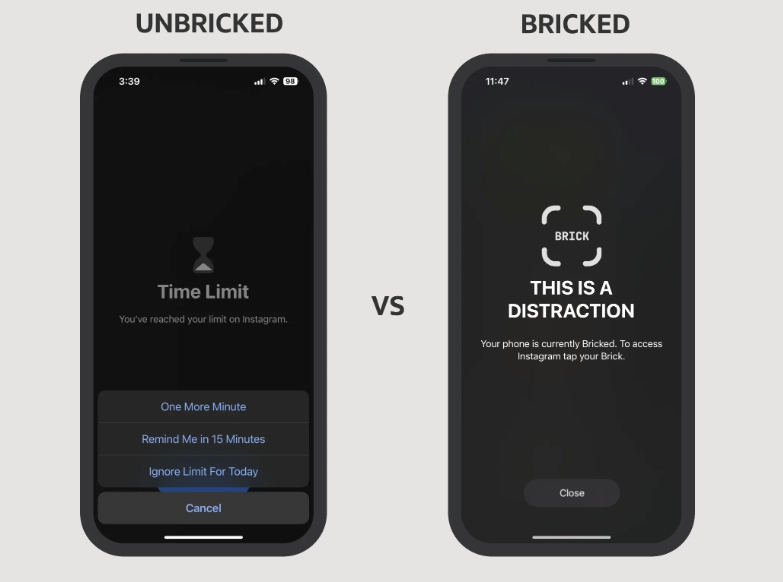
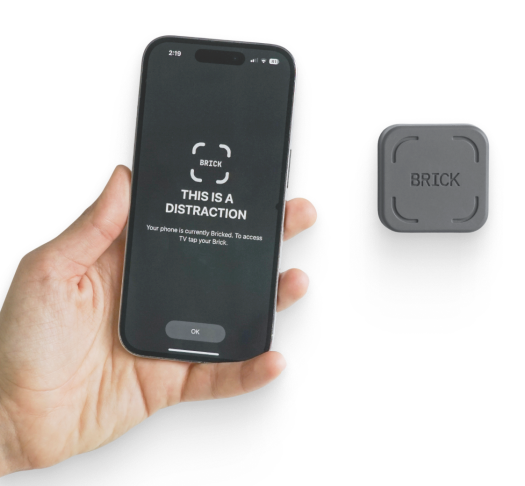
🔲 Get Brick: A Digital Wellness Device to Help You Overcome Digital Distraction. You just tap your iPhone to it, and it activates a custom focus mode you’ve already designed. Tempting apps? Blocked. Helpful ones? Still accessible. Want to learn more or try Brick yourself? Get 10% off with my link.

Download Your Free Guide to Grayscale
Turn your phone into a calm, less-distracting space with my free step-by-step guide complete with screenshots for both iPhone and Android. 👉 Guide to Grayscale
Grab Your Free Truth-Filled Wallpapers
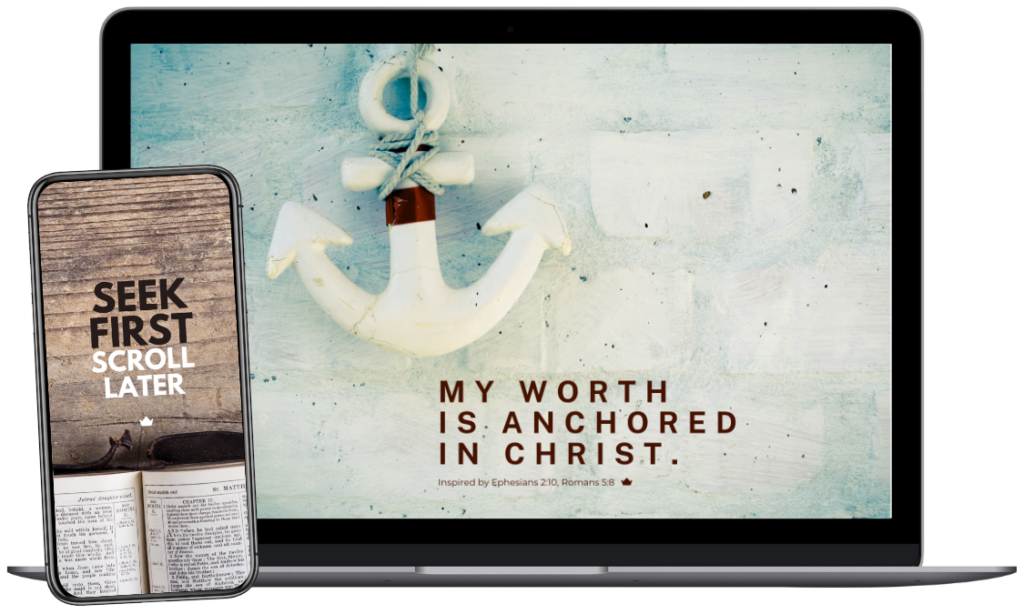
Transform your lock screen into a spiritual anchor point with my free gallery of phone and desktop wallpapers. 👉 Digital Wallpaper
Leave a Review
Has the podcast helped you create healthier habits?
If you’ve learned something that’s making a real difference in your life, I’d love to hear about it! Your review not only encourages me but also helps others find this podcast and start their own journey to overcome digital distractions. I read every single one and truly appreciate your support!
WRITE A REVIEW ➞


TAKE THE QUIZ ➞
Learn to declutter your digital life, set healthy boundaries, and create spaces of rest.
Ever wonder what’s really fueling your screen habits? This quiz will help you find out! It’s quick, fun, and packed with insights to help you tackle distractions head-on. Your results will show you exactly where to start.
Take the free
Screen Time Personality Quiz!
GET THE FREE GUIDE ➞
The Simple Step to Reduce Screen Time
Imagine your phone fading into the background and notifications no longer grabbing your attention, social media feeling less tempting, and your mind finally free to focus on what truly matters. That’s the power of grayscale. It’s a simple but powerful shift.
Make Your Phone Less Addictive in Seconds
Your Guide to Grayscale will help you experience it for yourself!


DOWNLOAD ➞
Grab the encouraging
wallpapers for phone and desktop.
From uplifting Bible verses to truth-filled identity reminders, and even just-for-fun designs, these wallpapers are a great way to stay grounded throughout your day. Choose from 8 desktop and 8 phone designs.

MEET THE BRICK ➞
What if there was an actual wall between you and digital distraction? Not another screen time limit you can easily ignore, but a physical barrier that makes mindless scrolling nearly impossible. After 30 days of testing, I've found the tool that finally works: The Brick.
