Screen Time Personality Quiz
Discover Your Pathway to Digital Peace.
TAKE THE QUIZ

Guide to
Grayscale
MAKE YOUR PHONE LESS ADDICTIVE IN SECONDS.
DOWNLOAD


DOWNLOAD
Your screen can become a tool for encouragement.
Wallpapers for Desktop & Phone
Hey, I’m Julianne!
Christian Coach, encourager, digital distraction disruptor. I help people reduce their screen time, build life-giving habits, and stay focused on what matters most. The digital world isn’t going away, but your distraction can. So glad you’re here!

Welcome!


TELL ME MORE
Block Distracting Apps With One Quick Tap
Meet The Brick
December 9, 2025
46 | The Self-Leadership Secret to Overcome Phone Addiction and Beat Digital Distraction
When you wake up in the morning, what’s the first thing your hand reaches for? If you’re like most people, your feet haven’t even hit the floor yet before your phone is in your hand. This compulsive reach isn’t just a harmless habit. It’s phone addiction, and it’s quietly shaping who you’re becoming.
If you’re a Christian struggling with phone addiction, you’re not alone. You might feel ashamed that you check social media before you pray, or guilty that your screen gets more of your attention than Scripture. But this isn’t just about willpower or screen time limits. This is about something far more significant: learning self-leadership in a world that’s constantly trying to lead you somewhere else.
Because here’s what I’ve discovered: when everything around you is screaming for your attention, someone else is controlling where your focus goes. And if you’re going to lead your life, your work, your relationships, your faith, you have to start by learning to lead yourself. The question is simple but profound: Who’s actually leading your life right now?
The Myth of Living on Autopilot
A few months ago, I was coaching a ministry leader. Great guy. Loves Jesus deeply. Passionate about his calling. But he kept telling me he felt this bone-deep tiredness by midday, and he couldn’t figure out why. It wasn’t physical exhaustion exactly. It was more like a mental fog, an emotional weariness that settled over him before lunch even rolled around.
So I asked him a simple question: “What’s the first thing you do when you wake up?”
He didn’t even have to think about it. “Check my phone,” he said.
Email. Social media. Messages. News headlines. All of it before his morning coffee was even brewed. By the time he finally sat down to pray or read Scripture, his mind was already scattered across a dozen different conversations and concerns. That quiet internal voice, that still small place where he could hear God, was completely drowned out by noise.
Here’s what was happening: He had handed the steering wheel of his entire day to his phone. His screen was leading him, not the Spirit. He was living on autopilot with his phone habits, and his phone addiction was costing him more than he realized.
And that’s the thing about living on autopilot. It isn’t neutral. Autopilot doesn’t just let you coast. It trains you, shapes you. It rewires how you think and what you expect from life. When you’re trying to overcome phone addiction or break free from digital distraction, you’re fighting against patterns that have become deeply ingrained.
Romans 12:2 says it this way: “Do not conform to the pattern of this world, but be transformed by the renewing of your mind.” That kind of renewal starts with awareness, with noticing when you’re just reacting to your phone instead of actually leading yourself.
Science backs this up too. When your attention keeps jumping from notification to text to app, your brain starts to lose its edge. It gets harder to learn. Harder to stay focused. Harder to sense God’s presence in the noise.
So what does self-leadership really mean in your digital life? How do you actually overcome phone addiction?
It starts with the pause.
The Power of the Pause
That moment right there, that pause, is where everything starts to shift. Maybe you wait a few minutes before you reach for your phone in the morning or you sit quietly for just thirty seconds instead of filling the silence with scrolling. Maybe you take one deep breath before you open that app.
That small pause reminds your mind and your heart: I have a choice here. I’m not just a passenger being carried along by notifications and screen habits. I’m the pilot. I get to choose my direction and decide what actually deserves my attention.
This is the gateway to self-leadership. This tiny moment between impulse and action is where you reclaim control. It’s where Christian digital boundaries begin to form. It’s where spiritual self-control becomes more than just a concept and turns into daily practice.
The pause is how you begin to overcome phone addiction, not through shame or rigid rules, but through intentional choice.
Because if you live on autopilot long enough, you’ll eventually wake up one day and realize your values, your identity, even your soul has been shaped by something other than your Creator. But when you pause, when you choose, you take back the controls. And you begin to lead yourself again.
Self-Leadership as Spiritual Formation
Here’s something most people miss entirely: self-leadership isn’t just a productivity hack or a time management strategy. Self-leadership is spiritual formation. And when it comes to phone addiction, you’re not just breaking a bad habit. You’re forming your character.
The Bible doesn’t give us tips and tricks. It gives us transformation.
Proverbs 25:28 puts it this way: “Like a city whose walls are broken through is a person who lacks self-control.” Now, self-control isn’t about white-knuckling your way through temptation. It’s about being built up. Protected. Stewarded from the inside out.
Picture this: your attention, your mind, your habits? When they’re healthy and strong, they act like protective walls around a city. When those walls are strong, you’re protected from every distraction that wants to walk in and take over. But when those walls are broken down, every notification, every algorithm, every ping can just walk right in and shape you however it wants.
One of my favourite quotes is from John Mark Comer. He says, “What you give your attention to is the person you become.” Your attention is the doorway to your heart. The screen, the feed, the algorithm, they don’t just distract you. They disciple you. Phone addiction isn’t just about time wasted. It’s about identity shaped.
In habit science, we talk about something called habit loops. There’s a cue, a routine, and a reward. Here’s what it looks like with your phone: You feel bored or weary (that’s the cue). So you open Instagram (that’s the routine). And you get this quick hit of novelty or entertainment (that’s your reward). Over time, this loop doesn’t just become automatic. It rewires your brain. It shapes who you’re becoming at a deep level.
But spiritually, we’re called to a different kind of loop. A redemptive one. I’m weary (that’s the cue). So I come to Jesus (that’s the routine). And I find rest (that’s the reward).
If we let the digital loop dominate our days and our hearts, then living on autopilot becomes our spiritual enemy.
Build a Rhythm of Pausing
So here’s the practice for developing self-leadership and beginning to overcome phone addiction: Build a rhythm of pausing into your life.
Every single time your phone buzzes, pause. Take one breath. This is your moment to choose. You can pray something simple like, “Lord, I want You to lead this moment.” You can think about whether this notification actually needs your attention right now. And then you decide.
Will I check this notification right now, or will I wait? Will I open this app, or will I close it? The pause gives you space to be present in the moment instead of being swept away by reaction.
That tiny pause retrains the loop. And over weeks and months, it builds deep self-leadership. It builds spiritual muscle. Because when you lead yourself, you’re not just managing your schedule. You’re forming your character. You’re becoming the person God created you to be.
This is what intentional living as a Christian looks like in practice. Not perfection, but progress. Not legalism, but freedom.
Distraction as a Discipler
Here’s what most of us don’t realize: digital distraction isn’t just working against you. It’s actively working on you, shaping you into someone you never chose to become. Phone addiction is more than a time problem. It’s a discipleship problem.
Author John Eldredge has this powerful concept he calls “Disciples of the Internet.” He says that you are a disciple of whatever system teaches you how to live, wherever you turn on a daily basis for guidance and answers. For most of us, that’s our phones. That’s the internet. And even though we call ourselves disciples of Christ, the internet is the one actually discipling us.
What does that mean practically? It means the internet has trained your soul to expect immediate answers to every question. It’s given you a deep suspicion toward mystery and anything you can’t quickly explain. It’s taught you that practical and efficient is what really matters in life. And it’s eroded your confidence that you can know anything for certain because yesterday’s facts get overturned by today’s breaking news.
The process of having instant access to everything in less than one second has shaped us more than we realize. Research shows that social media distractions are driven by fear of missing out, task avoidance, and weaker self-control. Other studies link excessive screen time to disrupted sleep, impaired focus, and reduced learning.
When we ignore this, our identity gets shaped by what’s easiest to access instead of what’s deepest in us. We become more anxious and less present. More reactive and less grounded in who we truly are.
But here’s the good news: distraction can become an invitation to self-leadership. It shows you what’s actually leading you right now. And it gives you the chance to choose your discipler. You can overcome phone addiction not through shame, but through intentional discipleship.
Leading yourself means not defaulting to technology, algorithms, or notifications to tell you who you are and what matters. Here’s a simple practice: Choose one hour each day where you don’t pick up your device at the first cue. Instead, pick up something aligned with your soul. Prayer. Scripture. A walk outside. A real conversation.
Watch what happens. Your heart starts to shift and your rhythm changes. Your sense of self begins to settle. This is digital wellness for Christians who want to live with purpose.
Because what leads your attention leads your identity. And you get to choose.
Leading Yourself Looks Like Limiting Yourself
If you want to develop self-leadership and truly overcome phone addiction, you have to be willing to limit yourself. And I know that sounds counterintuitive in a culture that preaches unlimited freedom and endless options. But limitation isn’t restriction. It’s the pathway to spiritual freedom.
Think about Jesus. Luke 5:16 tells us that He often withdrew to solitary places. Jesus led Himself by retreating from the noise, by creating Christian digital boundaries (though He didn’t call them that), by choosing what He would and wouldn’t give His attention to.
Discipline isn’t the opposite of freedom. It’s the pathway to it.
Without screen time boundaries, you’ll be led by every ping and ding, every trending loop that wants to pull you in. Proverbs 25:28 says it again: a person without self-control is like a city with broken walls. When your attention has no guardrails, distraction will exploit every vulnerability. Phone addiction thrives in the absence of boundaries.
So here’s your challenge this week: Choose one app or one digital behaviour that you will intentionally limit. Maybe you’ll silence all notifications or decide to you’ll uninstall one social media app for a season. Maybe you’ll create a no-screen zone after 9 p.m.
But here’s the key: don’t just create a boundary. Create a replacement action. Not just “no phone,” but “yes to presence.” Fifteen minutes of quiet with God. A phone-free walk. Worship music before bed.
You’re doing this so you can step into your role as the leader of your own life. First to yourself, and then to the people you’re called to serve. Because you can’t lead your family, your ministry, or your mission if you’ve surrendered your attention to phone habits that don’t serve your calling.
Frequently Asked Questions About Phone Addiction and Self-Leadership
How do I know if I have phone addiction?
If you check your phone before praying in the morning, feel anxious when you can’t find your device, experience withdrawal symptoms when away from your phone, or if your family has mentioned your phone use affects your presence with them, these are clear signs of phone addiction. Self-leadership begins with honest self-awareness about your phone habits.
What’s the difference between self-control and self-leadership when it comes to phone addiction?
Self-control is resisting the urge to check your phone in the moment. Self-leadership is creating systems, boundaries, and rhythms that make phone addiction less powerful. It’s proactive rather than reactive. When you develop self-leadership, you’re building protective walls around your attention before the battle even begins.
Can I overcome phone addiction and still use social media?
Absolutely. Overcoming phone addiction isn’t about abandoning technology. It’s about using it intentionally rather than letting it use you. The goal isn’t to eliminate screens but to ensure they serve your values and calling rather than undermining them. Christian digital boundaries help you steward technology for God’s glory without falling into phone addiction patterns.
The Secret Revealed
So here’s what we’ve discovered: The secret to overcome phone addiction is the pause. That tiny moment between impulse and action where you get to choose who’s actually leading your life. This is how self-leadership transforms your relationship with technology.
We’ve explored how living on autopilot hands control to your screen. We’ve seen how your attention, mind, and habits become protective walls when they’re healthy and strong and we’ve looked at how digital distraction disciples you and how phone addiction is more than just a time problem. And we’ve discovered that Christian digital boundaries aren’t restrictive—they create freedom.
Here’s a prayer for you:
Heavenly Father, help me steward my mind, my time, my attention. May I follow Your lead, not the scroll. May I build practices that draw my soul closer to You. And when the world’s noise is loud, may Your voice be louder still. Amen.
Now I want you to ask yourself: What’s one way God is inviting me to lead myself more intentionally this week?
Write it down. Make it real.
The pause is your gateway to freedom from phone addiction. And it starts right now, with this next choice you make. You get to decide who leads your life.
Choose well.
Resources to Help
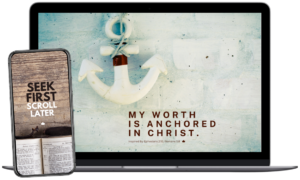
These digital wallpapers are a game changer in helping you pause when you pick up your phone. They are a great reminder for you! Grab Your Free Truth-Filled Wallpapers and transform your lock screen into a spiritual anchor point with my free gallery of phone and desktop wallpapers. 👉 Digital Wallpaper
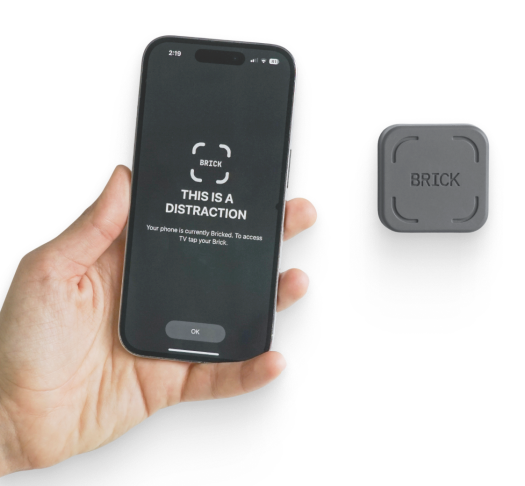
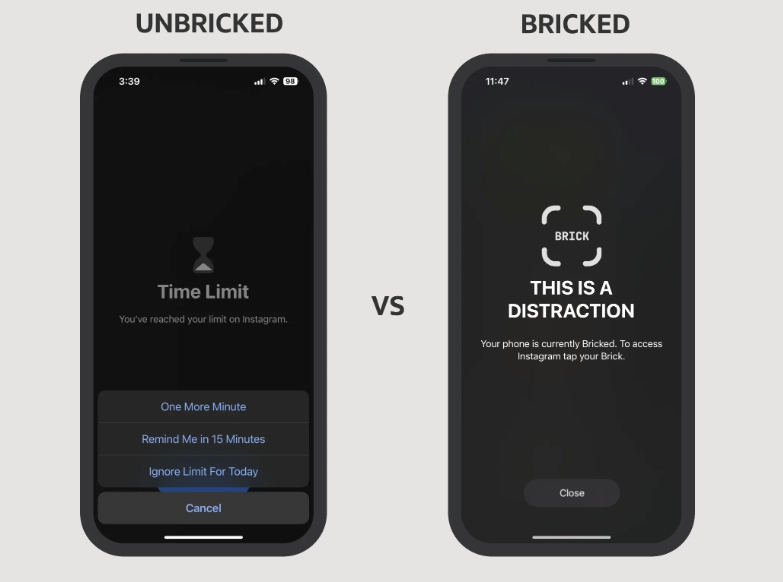
🔲 Get Brick: A Digital Wellness Device to Help You Overcome Digital Distraction. You just tap your iPhone to it, and it activates a custom focus mode you’ve already designed. Tempting apps? Blocked. Helpful ones? Still accessible. Want to learn more or try Brick yourself? Get 10% off with my link.

Leave a Review
Has the podcast helped you create healthier habits?
If you’ve learned something that’s making a real difference in your life, I’d love to hear about it! Your review not only encourages me but also helps others find this podcast and start their own journey to overcome digital distractions. I read every single one and truly appreciate your support!
WRITE A REVIEW ➞


TAKE THE QUIZ ➞
Learn to declutter your digital life, set healthy boundaries, and create spaces of rest.
Ever wonder what’s really fueling your screen habits? This quiz will help you find out! It’s quick, fun, and packed with insights to help you tackle distractions head-on. Your results will show you exactly where to start.
Take the free
Screen Time Personality Quiz!
GET THE FREE GUIDE ➞
The Simple Step to Reduce Screen Time
Imagine your phone fading into the background and notifications no longer grabbing your attention, social media feeling less tempting, and your mind finally free to focus on what truly matters. That’s the power of grayscale. It’s a simple but powerful shift.
Make Your Phone Less Addictive in Seconds
Your Guide to Grayscale will help you experience it for yourself!


DOWNLOAD ➞
Grab the encouraging
wallpapers for phone and desktop.
From uplifting Bible verses to truth-filled identity reminders, and even just-for-fun designs, these wallpapers are a great way to stay grounded throughout your day. Choose from 8 desktop and 8 phone designs.

MEET THE BRICK ➞
What if there was an actual wall between you and digital distraction? Not another screen time limit you can easily ignore, but a physical barrier that makes mindless scrolling nearly impossible. After 30 days of testing, I've found the tool that finally works: The Brick.
